

Quality Nursing Care at Home
We offer highly experienced nurse care service at your door step in Dubai.

 Buy now pay later

The short answer: yes. Dehydration doesn't need a scorching afternoon. In Dubai's cooler months, you can still lose more fluid than you take in, because cooler weather dulls thirst, indoor air conditioning dries the air, and people tend to exercise and spend time outdoors more. Most winter dehydration is mild and fixed by drinking more. In some situations, such as illness with vomiting or diarrhea, plain water isn't enough, and a medically assessed IV drip at home Dubai providers offer can be one option. This guide explains how to tell which situation you're in.
When it's hot, thirst is an obvious reminder. In cooler weather, the urge fades, so it's easy to go hours without a drink and not notice.
Air conditioning and, in some homes and offices, heating can lower indoor humidity. Dry air increases the water your body loses through breathing and skin without you ever feeling sweaty.
Pleasant weather encourages running, cycling, golf, desert trips, beach days, and long walks. You may sweat less visibly in a breeze, but you're still losing fluid, and the sun is still out.
Coffee in the morning and a few drinks in the evening can add up, while water gets forgotten. Heavy alcohol intake in particular can leave you dehydrated the next day.
Colds, flu, and stomach bugs increase fluid loss through fever, sweating, vomiting, or diarrhea, and a poor appetite means less fluid from food.
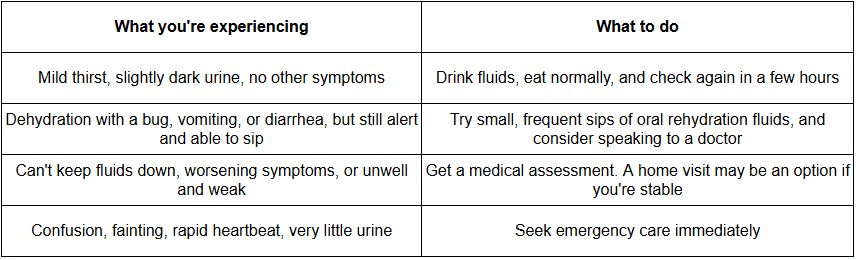
If you or someone else has these signs, seek emergency care rather than trying to manage it at home.
You don't need a gadget. Urine color gives a rough guide:
Certain vitamins, foods, and medications can change urine color, so treat this as a clue, not a diagnosis.
Fluid needs vary with body size, activity, climate, and health, so there's no perfect figure for everyone. Many adults do well with a steady intake through the day, with more when exercising, in the heat, or unwell. A few habits help:
Children can become dehydrated quickly, especially when ill. Fewer wet nappies, no tears when crying, a dry mouth, and unusual sleepiness are warning signs. Babies and young children with vomiting or diarrhea should be assessed by a doctor promptly.
The sense of thirst can fade with age, and some medications affect fluid balance. Older adults may need reminders to drink, and early help if they're unwell.
Pregnancy increases fluid needs, and severe morning sickness can lead to dehydration. Contact a doctor if you can't keep fluids down.
Training outdoors, even in winter, means higher fluid and electrolyte losses.
Conditions such as diabetes and kidney or heart disease, and some medications, change how your body handles fluid. Follow your doctor's advice rather than general tips.
Most of the time, drinking fluids and eating normally is the right way to rehydrate. IV fluids are a medical treatment, not a replacement for good drinking habits, and healthy people with no symptoms don't need them as routine.
There are situations where oral rehydration may not be enough, such as:
In these cases, a clinician may recommend IV fluids, which deliver fluid and electrolytes directly into the bloodstream. The key words are "after assessment": the right treatment depends on how dehydrated you are and why.
We offer highly experienced nurse care service at your door step in Dubai.
Trained DHA registered nurses, care takers, babysitters, newborn care and midwifery services you can rely on.
If a doctor or nurse assesses you and recommends IV fluids, an at-home visit usually works like this:
For many people, the main advantage of an IV drip at home is staying in bed or on the sofa while feeling unwell, rather than traveling and waiting at a clinic.
Most winter dehydration is easy to prevent, but when you're unwell and can't keep fluids down, you shouldn't have to push through it alone. Nightingale Health Services offers professional IV drip at home Dubai services, with a licensed medical team who assess you first, explain your options, and care for you in the comfort of your own home.
Want to know more? Contact us to learn more and book a consultation.
Still unsure about something? Our team answers questions like these every day.
Yes. Cooler weather reduces thirst, dry indoor air increases fluid loss, and more outdoor activity can raise your needs. It's easy to underestimate how much you're drinking.
Common signs include thirst, dark urine, headache, tiredness, dizziness, and dry lips. Severe signs, like confusion or fainting, need urgent care.
Usually not. Mild dehydration is normally treated by drinking fluids. IV fluids are used when someone can't keep fluids down, is significantly unwell, or has been advised to have them by a doctor.
When administered by licensed professionals after a proper assessment, it's generally considered safe for suitable patients. It isn't right for everyone, which is why the assessment matters.
Needs vary with body size, activity, and health. Drink regularly through the day, drink more when active or unwell, and use your urine color as a guide.
24/7 At-Home Care
Your health is our priority — call now to know more about Nightingale Home Healthcare Services in Dubai.