
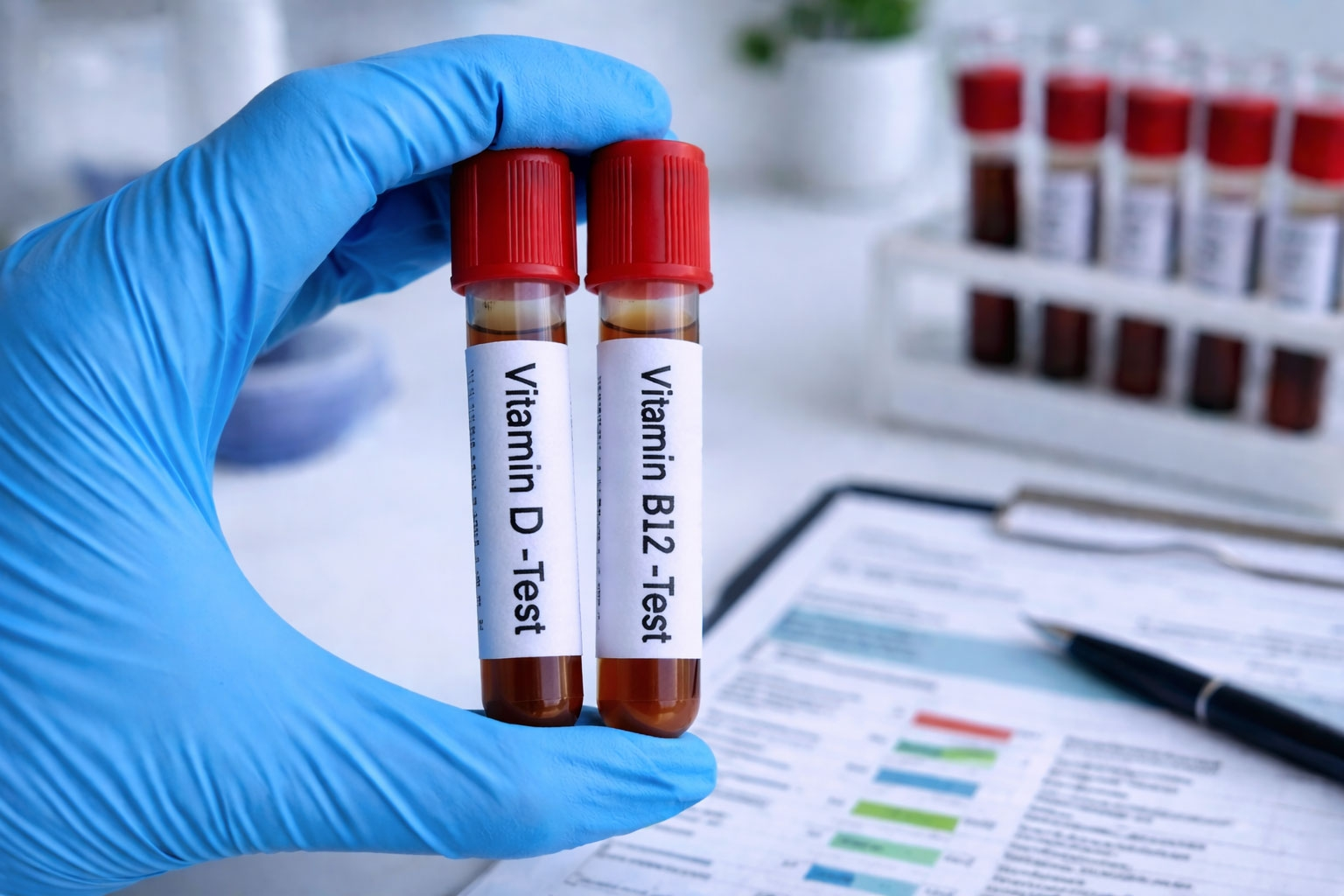
Sunny City, Deficient Residents: Why Vitamin D Deficiency Is Still Common in Dubai
Vitamin D Test in Dubai: Why Deficiency Is Still Common
Dubai gets an average of over 3,500 hours of sunshine a year. On paper, that should make vitamin D deficiency almost impossible here. Yet clinics across the city consistently report low vitamin D levels in a large share of residents, sun or no sun.
It’s one of the more counterintuitive health patterns in the region, and it catches a lot of people off guard. If you’ve felt persistently tired, achy, or low in mood despite living somewhere this bright, a vitamin D test in Dubai is often the simplest way to find out what’s actually going on. Let’s look at why this happens and what the data behind it really shows.
Why Vitamin D Deficiency Persists in a Sun-Rich City
What causes this paradox? Sunlight alone doesn’t guarantee vitamin D synthesis – it depends on skin exposure, timing, and how much time people actually spend outdoors, and Dubai’s lifestyle works against all three.
1. Indoor-Centric Daily Life
Most residents move between air-conditioned homes, cars, offices, and malls, with minimal direct sun exposure during the parts of the day when UVB rays are strongest for vitamin D synthesis.
2. Sun Avoidance During Peak Hours
Given Dubai’s intense midday heat, most outdoor activity happens early morning or evening – exactly when UVB levels are too low to trigger meaningful vitamin D production in the skin.
3. Clothing and Sun Protection Habits
Modest dress, cultural clothing norms, and consistent sunscreen use – all sensible for heat and skin protection – also significantly reduce the skin surface area exposed to UVB rays.
4. Skin Pigmentation
Individuals with darker skin tones require considerably longer sun exposure to produce the same amount of vitamin D as someone with lighter skin, due to higher melanin content acting as a natural UV filter. Given Dubai’s highly diverse population, this contributes meaningfully to city-wide deficiency patterns.
5. Air Quality and Haze
Dust and pollution common in the region can scatter and reduce UVB penetration, slightly lowering the effective sun exposure even for people who are outdoors.
What Is Vitamin D and Why Does the Body Need It?
Vitamin D is a fat-soluble vitamin that supports calcium absorption, bone health, immune function, and muscle performance. Unlike most vitamins, the body can produce it through skin exposure to UVB sunlight, which is why it’s often called the “sunshine vitamin.”
When levels drop too low, the body struggles to absorb calcium efficiently, which over time can affect bone density and overall energy regulation.
 In an emergency
If you are in an emergency and life threatening situation, please call 999 or request an Ambulance by calling 998. You can also use the mobile app DCAS SOS to request for emergency ambulance services.
Common Symptoms of Vitamin D Deficiency
Symptoms are often vague, which is part of why deficiency goes unnoticed for so long:
- Persistent fatigue or low energy despite adequate sleep
- Bone or joint aches, particularly in the lower back and legs
- Muscle weakness
- Low mood or difficulty concentrating
- Frequent minor illnesses, linked to reduced immune support
- Hair thinning in more pronounced cases
Why does this matter? Because these symptoms overlap with so many other common conditions – stress, poor sleep, iron deficiency – a blood test is really the only reliable way to confirm whether vitamin D is actually the cause.
How Does a Vitamin D Test Work?
A vitamin D test measures 25-hydroxyvitamin D levels in the blood, which is the most accurate marker of the body’s actual vitamin D status.
The process is straightforward: a blood sample is drawn, either at a clinic or through an at-home vitamin D test kit, and lab results typically classify levels as deficient, insufficient, or sufficient based on standard reference ranges.
When should someone get tested? It’s worth testing if you’re experiencing unexplained fatigue, bone or muscle pain, or simply haven’t had your levels checked in over a year, especially if your lifestyle involves limited direct sun exposure.
Vitamin D Test vs. Vitamin B12 Test: Why Both Matter
Vitamin D and vitamin B12 deficiencies often produce overlapping symptoms – fatigue, low mood, and muscle weakness – which makes it easy to confuse one for the other without proper testing.
Since both deficiencies are common in Dubai and share overlapping symptoms, testing for vitamin D and vitamin B12 together often gives a clearer picture than testing for either one alone.
Who Should Consider Testing?
- Residents who spend most daylight hours indoors or in air-conditioned spaces
- Individuals who consistently cover most of their skin outdoors or use high-SPF sunscreen daily
- People with darker skin tones, given the longer sun exposure required for adequate synthesis
- Anyone experiencing persistent fatigue, bone pain, or low mood without a clear explanation
- Vegetarians and vegans, particularly for B12 levels alongside vitamin D
- Older adults, whose skin naturally becomes less efficient at synthesizing vitamin D with age

Quality Nursing Care at Home
We offer highly experienced nurse care service at your door step in Dubai.

24x7 Medical care and great customer service
Trained DHA registered nurses, care takers, babysitters, newborn care and midwifery services you can rely on.
Best Practices After Testing
- Don’t self-prescribe high-dose supplements before testing. Over-supplementing vitamin D without knowing your baseline can lead to excessive levels, which carries its own health risks.
- Retest after a few months of correction, rather than assuming supplementation alone has resolved the deficiency.
- Pair supplementation with sensible sun exposure, such as brief periods of morning sunlight, alongside any recommended dosage.
- Discuss results with a doctor, especially if levels are significantly low, since underlying absorption issues can sometimes be a contributing factor.
- Test B12 alongside vitamin D if you’re experiencing fatigue-related symptoms, given how closely the two deficiencies can present.
Common Mistakes People Make
- Assuming living in a sunny city rules out deficiency, when lifestyle factors matter more than climate alone
- Taking vitamin D supplements without testing first, making it impossible to track whether levels are actually improving
- Ignoring persistent fatigue as “just being busy”, when a simple blood test could identify a clear, correctable cause
- Testing only vitamin D and overlooking B12, despite how often the two deficiencies occur together with similar symptoms
- Skipping retesting, leaving no way to confirm whether supplementation dosage is actually adequate
Conclusion
Dubai’s sunshine doesn’t automatically translate into healthy vitamin D levels, and for most residents, the daily rhythm of indoor living, sun avoidance during peak hours, and consistent sun protection outweighs the benefit of living somewhere this bright. The result is a pattern of deficiency that’s easy to miss because the symptoms are so easy to attribute to something else.
A simple blood test remains the most reliable way to know where you actually stand, rather than guessing based on how much time you assume you spend outdoors.
If persistent fatigue, low mood, or unexplained aches have been part of your routine, it may be worth checking your levels rather than living with the guesswork. Nightingale Health Services in Dubai offers a convenient vitamin D and vitamin B12 test, including at-home options, so you can get clear answers without disrupting your day.
Everything You Need To Know
Still unsure about something? Our team answers questions like these every day.
Talk to usBecause most residents spend the majority of daylight hours indoors or in air-conditioned environments, avoid peak sun hours due to heat, and often wear sun-protective clothing or sunscreen – all of which significantly reduce actual UVB skin exposure needed for vitamin D synthesis.
A vitamin D test measures 25-hydroxyvitamin D levels through a blood sample, either drawn at a clinic or collected using an at-home test kit, with results classified as deficient, insufficient, or sufficient.
Common symptoms include persistent fatigue, bone or joint pain, muscle weakness, low mood, and increased susceptibility to minor illnesses, though many people experience no obvious symptoms at all.
Yes, at-home vitamin D test kits are available, allowing you to collect a sample without visiting a clinic in person, with results processed through a lab and shared digitally.
It’s often worthwhile, since B12 and vitamin D deficiencies share overlapping symptoms like fatigue and low mood, and testing both together gives a clearer picture of what’s actually causing your symptoms.
For most people, annual testing is reasonable, though those who have previously been deficient or are undergoing supplementation may benefit from retesting every three to six months to track progress.
Diet contributes, particularly through fortified foods and fatty fish, but most people with confirmed deficiency need supplementation alongside sensible sun exposure to restore levels effectively.
Yes, excessive supplementation without testing can lead to elevated levels, which is why checking your baseline first and following guided dosage is safer than supplementing blindly.
Receive top-notch healthcare services right at home in Dubai.
Your health is our priority — call now to know more about Nightingale Home Healthcare Services in Dubai.