

Skip to content
Pay in instalments with Tamara or TabbyBuy now pay later

Author: Joel George

The benefits of baby massage

Post date

Soothing touch is one of the most important things a child needs to thrive, making baby massage a wonderful way to connect with your little one and boost their well-being. The practice dates back centuries, with techniques handed down from generation to generation. In recent years, more people are recognising the role massage plays in their baby’s health and development, and it’s increasingly used in neonatal intensive care wards to support growth in premature infants. Here are some of the main reasons to include regular massage as part of your routine:

Pain relief

Various studies show that massage provides relief from pain caused by problems such as teething, colic, constipation and wind. Massaging a baby’s abdomen helps trapped pockets of air move through the intestines; it can improve overall gastrointestinal function and even increase the appetite. Plus, massage releases endorphins to counteract pain.

Relaxation

When you massage a baby, it stimulates their central nervous system causing the body to produce the feel-good hormone oxytocin. As a result, their breathing deepens, the heart rate slows and the blood pressure lowers. As you care for them and respond to their needs, they produce less cortisol, meaning they’re less likely to react as strongly to stressful situations.

Stimulation and development

It has been suggested that baby massage creates better connections between the brain and body. As well as increasing alertness and improving cognitive performance in the moment, this heightened mental and physical connection can also help prevent colic and general fussiness brought on by over-stimulation. Massage helps the nervous system to mature faster and it becomes better able to cope with stimulus.

Bonding

Parents and babies are biologically designed to bond with each other after birth. This bond is crucial so that the mother accepts the baby and their needs are met. During the massage you’re are able to connect deeply, make eye-contact and enjoy an easy, relaxed way of bonding. And it’s not just the baby who benefits. Massaging your baby will help you relax during the early days and it has been found to reduce rates of postnatal depression among new mums. The physical interaction builds trust and provides you with a non-verbal way of communicating.

When to begin baby massage?

Baby massage can begin a few weeks after the birth, but you’ll need to watch your little one for cues. For example, wait until they’re alert and awake, and don’t start if they’re showing signs of distress. During the massage, if they cry or turn their head away stop and try again later. Choose a warm, peaceful spot and wait at least 45 minutes to an hour after feeding to avoid vomiting. Give your baby more enjoyment by talking to them softly, making soothing sounds or singing as you gently stroke their skin.
Get in touch to find out about our baby massage classes at Nightingale, available at home or in our health hub.

Read more
Should you swaddle your baby?

Post date

Many advocates of swaddling describe it as the secret to calming your infant and promoting better sleep. When you think that babies spend an average of 37 weeks feeling safe and secure in the womb, it’s no wonder that being in the outside world can be an overwhelming experience. That’s where swaddling can help to imitate the warmth of the womb as your little one adjusts to their new environment. Some of the benefits of swaddling include:

  • Babies up to three to six months have a strong startle reflex (Moro reflex). This causes them to flail their arms and legs, and the sudden movement can disturb their sleep. Swaddling helps to decrease the movement and stop this from happening.
  • It gives a baby the feeling of being held close.
  • Newborns often scratch their delicate skin easily and swaddling is a good way to keep their hands from touching their face.
  • The blanket keeps very young babies warm and cosy until they’re able to regulate their own temperature more effectively.

Swaddling safety

Blankets are generally not recommended for babies up to 12 months because of the risk of suffocation and Sudden Infant Death Syndrome (SIDs), leading some people to be concerned about swaddling. However, the American Academy of Pediatrics (AAP) recognises the benefits when the practice is done properly, following Safe Sleep Guidelines. The main thing is to make sure that the blanket isn’t too loose, allowing it to unwrap and cover the baby’s face. You also need to be cautious of securing the blanket too tightly around their hips, as this can cause problems with the hips and joints.

  • Always place the baby to sleep on their backs and tuck the bottom of the blanket underneath them.
  • Check that you can fit two to three fingers in between the blanket and your baby’s chest at the top. The bottom of the blanket should provide room for the baby’s legs to stay bent.
  • Avoid overheating by keeping the room at a comfortably cool temperature (around 20-24 degrees Celsius in Dubai) and don’t be tempted to dress your baby in multiple layers; a pair of pyjamas and the swaddle should be enough.
  • Let your baby sleep in their own crib rather than your bed.
  • Keep the environment smoke-free.
  • It’s recommended to stop swaddling once your baby is able to roll over onto their front.

Technique

Start by laying the blanket out flat, folding one of the top corners down. Place the baby on top of the blanket, face up with their head above the folded corner. Straighten their left arm and wrap the left corner of the blanket over their body, tucking it between their right arm and the right side of their body. Tuck the right arm down and fold the right corner over the body tucking it under the left side. Then, fold the bottom of the blanket up loosely and secure it underneath them.

Swaddling is just one of the many baby care topics we cover in our pre and postnatal sessions at Nightingale, contact us to find out more. Our newborn baby care nursescan help you with it.

Read more

Seminar on baby health @ Mediclinic Parkview

Post date

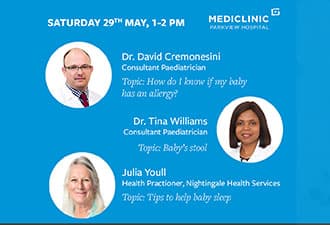
Attention new parents: A seminar is happening at Mediclinic Parkview Hospital on Saturday 29th May, 1-2PM.

Dr. David Cremonesini (Consultant Paediatrician) will talk about “How do I know if my baby has an allergy”,

Dr. Tina Williams (Consultant Paediatrician) about Baby’s stool,

And Julia Youll from Nightingale Health Services will give some tips to help your baby sleep!

seminar baby health

seminar baby health

Nightingale Partners With Safe Space for an Online Talk on Maternal Mental Health

Post date

As many as 1 in 5 women experience some type of perinatal mood and anxiety disorder and it’s estimated that 7 in 10 downplay their symptoms

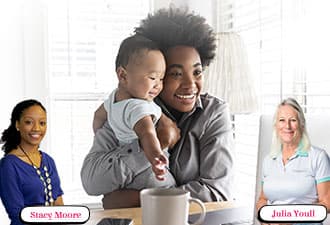
Leading healthcare provider Nightingale is teaming up with Safe Space to host a virtual fireside chat where mums and mums-to-be can tune in for expert advice and practical tools to help them navigate the early days of motherhood. Held during Maternal Mental Health Month on Monday 24th May, from 4.30-5.30pm, the interactive session is led by Nightingale’s Public Health Practitioner Julia Youll and Educational Psychologist Stacy Moore CPsychol.

Julia is based in Dubai and has several decades of nursing and primary care experience, with many of those spent as a health visitor in London. UK-based Stacy is the founder of the educational psychology company Inner Circles, and founder of The Nesting Coach, a platform that supports women in their transition into becoming a mother.

Julia and Stacy will cover aspects including the physical, psychological, and emotional changes motherhood brings, spotting signs of depression, and places to go for extra help and support, as well as the impact that COVID has on parents welcoming a new baby away from their families. There will also be a Q&A where attendees can submit questions via an anonymous online chat.

Maternal Mental Health Talk, Monday 24th May, 4.30-5.30pm. Link to register: bit.ly/3v9UNZG

safespace partnership

safespace partnership

International Nurses Day 2021

Post date

To mark this year’s International Nurses Day on May 12th, we’ve asked three of Nightingale’s nurses to share a glimpse of their typical day and tell us what they love most about the job.

Malin Ghavami (Head Midwife)

My day frequently starts with a home visit to new mums, usually when their little one is less than four days old. We discuss the delivery and their recovery, and I offer any help and encouragement they need about things like feeding techniques, monitoring the baby’s weight and progress. After each visit, I write up my notes and tell the family when I’ll be visiting them next.

Afterwards, I schedule baby massage sessions for infants who are a few weeks old and sometimes a postnatal massage for their mums. I also manage the nurses in the community, so I dedicate time to training, or we have a general catch-up meeting. Training topics range from perfecting swaddling techniques to discussing clients’ specific needs and how best to address them.

As the day winds down, my colleagues and I discuss the schedule and requirements for the next day, although that can change entirely when a little one needs special attention earlier than planned.

I chose to be a nurse because I wanted a profession that I could be proud of, where I can positively impact people’s lives, be it the mummies or their sweet little babies. There’s no better feeling.

Julia Youll (Public Health Practitioner)

I wanted to be a nurse ever since I was six years old and was given a nurse’s uniform for Christmas, complete with a medical bag. My grandfather was a GP and I was fascinated by the surgery and all the paraphernalia (in those days kept at his home). As soon as I turned 17, I started applying to teaching hospitals in London.

We were trained at the hospital and had a lot of practical time on the wards, interspersed by study blocks.

We certainly weren’t supernanny as students in those days, and we wore stiff starched detachable collars, cotton frilly caps and proper aprons!

I usually start my morning checking in with the families that I’m supporting with sleep problems, and it’s always great to hear that a good night has been achieved. Everyone has a new lease of life when they’re feeling rested.

My home visits (or calls) usually take place in the afternoons. It’s really productive to see babies and their parents in their home environment. After an hour or so’s discussion, I go away and create a plan for families to work with. This is tailor-made, specific to each one’s circumstances and dynamics. Follow-up may entail tweaking the plan, or looking at different ideas, but in general, a family without sleep deprivation is a happier one. Even a small change can make a huge difference.

Hermina (Nurse)

Working as a nurse at Nightingale gives me the opportunity to support families during an incredibly important yet challenging time ,and it’s wonderful to see them experience so many beautiful firsts together.

Baby Afra, born earlier this year, was premature and underweight. She was so small and delicate. The first time I held her, I could feel her vulnerability and how much love and care she needed. I fed her every three hours with precise measurements of milk and the correct feeding technique, checking her weight every ten days. She started gaining weight and every day she amazed us with her smile. Now, when I look at her playing and giggling, I can’t explain the happiness I feel having being part of her life. Moments like these are why I decided to become a nurse.

Read more

Rickets or bowed legs

Post date

bowlegs

bowlegs

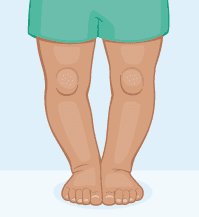
Do your child have bowed legs like like this? Did you know that there are chances that it could be a child-hood disorder known as Rickets. But don’t worry. Most of the time it turns out to be Bowed Legs (Blount’s Disease) which is very common in children under 3 years and will gradually get corrected when he/she grows up.

Bow legs (or genu varum) is when the legs curve outward at the knees while the feet and ankles touch. Infants and toddlers often have bow legs. Sometimes, older kids do too. It’s rarely serious and usually goes away without treatment, often by the time a child is 3–4 years old.

The main reason for Rickets is not able to absorb Calcium due to the lack of Vitamin D. This is a common case in middle east and usually associated with living inside apartments where there is not enough sunlight.

It is recommended for all children to supplement with oral vitamin D-drops after birth

You can get a Vitamin D test from home by clicking here.

There are three major types of rickets are distinguished:
• Renal osteodystrophy, in which the kidneys fail to maintain blood levels of calcium and phosphorus.
• Vitamin D‒resistant or hypophosphatemic rickets, which is a genetic disorder characterized by low phosphate levels unrelated to intake or vitamin D status
• Nutritional rickets stemming from deficiency of intake of dietary vitamin D, calcium, and/or phosphate during childhood – the most common form

Globally, rickets is most commonly found in children between 6 months and 24 months of age.

Findings associated with prolonged and extreme deficient intake typically include muscle weakness; delayed growth; pain in the legs, pelvis, and spine; and significant skeletal deformities. A child with rickets may display projection of the breastbone, thickened ankles and wrists, and bowed legs.

It’s always best to consult your pediatrician and get an x-ray done to check whether the child has got some skeletal disorder and treat it with proper vitamins and calcium.

We do pediatric physiotherapy for cases who suffer from disabilities , deformities and other pediatrics conditions using splints, braces ,swiss ball exercises and other effective treatment.

Tip: Let your children be in the sun as much as they can be. It really helps them in their growth. But also take care about the Sun safety measures to protect them during peak summer.

Sleep positions – Find your perfect sleep posture

Post date

Following our earlier post about building good sleep habits for your baby, we’re turning our attention to the equally important topic of sleep positions for grown ups. Approximately 40% of our lives are spent asleep in bed, meaning the correct sleeping position is vital, especially if you suffer from neck, back, shoulder, or hip problems. Our Nightingale physios Roxanne and Mohammed share their inside tips on the best sleeping positions for a pain-free slumber.

Why does it matter how we sleep?

The most comfortable position, mattress, and pillow arrangement enables your body to remain in a neutral and compression-free, middle-range position for the joints. When your joints are held in an extreme position for a prolonged period it can cause pain and irritation, whereas the right posture can prevent problems from developing or reoccurring. Although it’s normal to move around during the night, training your body to sleep in its optimal position can make a real difference.

Each position has its advantages and disadvantages, depending on any physical issues you may have.

Lying on either side:

Side sleeping is recommended for most people, as it allows optimal alignment for the spine and joints, helping you maintain a neutral position and causing less pressure.

  • Tips: The knees and hips should be slightly bent up with a small pillow between the knees. The pillow reduces pressure and prevents the pelvis from tipping forwards, rotating the lumbar spine. Make sure that the pillow under your head fully supports the curve of your neck so that your head is in a neutral position. Your ears should be stacked one above the other, preventing your head from tilting down towards the bed (if the pillow is too low) or upwards (if the pillow is too high).

On your back:

The other widely recommended sleep position is lying on your back. This may be beneficial if you have shoulder or hip pain and find it uncomfortable to sleep on your side. However, lying on your back with your legs flat tends to create an arch in the spine, putting stress on the facet joints and shortening the lower back muscles.

  • Tips: Position one or two pillows under your knees to reduce the arch in the lower back. Also, ensure your pillow fills and supports the curve of your neck in a neutral position. If the pillow is too big, the back of your head will be tilted forwards; if it’s too low, your chin will point up.

On your stomach:

Sorry if it’s your favourite, but this is the worst position for your body and spine! Your neck gets twisted in one direction, causing compression of the facet joints in the cervical vertebrae, as well as irritability in the arm and shoulder. It creates unbalanced tension in the neck muscles, leading to shortening and spasms, which can cause headaches and neck pain. There may also be an increased strain on the lumbar spine if your mattress is too soft, accentuating the arch and causing lower back pain.

  • Tips: If this is the only position you can fall asleep in, try placing a small pillow under your hips or stomach, then use a thin pillow under your head to minimise the twist in your neck. Avoid resting your head on your arms as it may contribute to shoulder pain and restriction.

Your pillow and mattress also affect whether or not you wake up with pain on a daily basis. A physiotherapist will be able to advise you on the correct sleeping posture, as well as what pillow or mattress is the most suitable for you. Contact us to find out more.

Read more

Building Good Sleep Habits for Your Little One

Post date

As new parents, sleep is a rare and cherished commodity. It may seem like an uphill battle now, but it’s important to know there are things you can do to get more rest. And, what better time to try than World Sleep Day (Friday 19th March)?
Sleep is essential for improving health and well-being, and the theme of this year’s event – “regular sleep, healthy future”– will resonate with families, in particular.

The science of newborn sleep

Babies sleep in utero, but they’re not born with sleep association or any concept of day and night. They only start to produce the sleep hormone melatonin around 12 weeks of age, which explains why they wake up frequently for feeds before then. The circadian rhythm (the body’s natural internal sleep regulation) also takes a while to develop but once it does, infants sleep longer at night, meaning you can squeeze in a few more precious hours of rest.

Sleep disruption

Various stages in a baby’s development impact their sleep performance, so it’s important to remain flexible with a newly established routine. Common ages where we see sleep regression are 4 months and 8/9 months, when separation anxiety kicks in. Teething can also disrupt sleep because of the discomfort and distress it causes, making your little one more restless than normal. Toddlers, meanwhile, are learning lots of new things, which is exciting as well as overwhelming, so they may start to devise strategies to keep you in the room longer for comfort before they nod off.

Creating healthy sleep habits

Regardless of age, one of the most useful things we can do with a small child is to build healthy sleep patterns. There are many different approaches that depend on the baby, and your family’s circumstances. Some general recommendations include:

  • Be consistent – set a regular bedtime and wind-down routine, which is the same every night
  • Exposing your child to natural sunlight early in the day will help to set he circadian rhythm and regulate sleep patterns
  • Keep the bedroom dark and quiet at night with no blue light
  • Before settling them, check that baby isn’t too hot or too cold by feeling the nape of their neck or chest (rather than forehead)
  • Establish if they are thirsty, frightened, in pain, or if the nappy is wet
  • In the early days, many babies like the security of being swaddled but only use a light covering to avoid overheating
  • If possible, practice placing the baby in the cot drowsy but not fully asleep on occasion, so they can learn to settle themselves
  • Try soothing them by staying close and saying the same words, like a little mantra, on a nightly basis, lulling them into relaxed mode
  • Baby massage techniques are a great tool to learn and use at home before bedtime
  • If baby nods off in response to the breast or bottle, encouraging them to do it independently can be tricky. Ultimately, it is achievable if you use consistent methods that trigger the right brain chemistry and set their internal clock

Top tip: don’t overload yourself with guilt! When we’re tired and juggling many things, it’s easy to rely on short-term solutions to get you through. Establishing a long-term solution requires commitment, consistency and time, but it will pay off in the end.

When to get help

It’s difficult to define what’s normal or not and how long it will be before sleep issues constitute a problem. Generally speaking, if your baby is more than 6 months of age and you’re still chronically exhausted and experiencing poor sleep quality, it may be a good time to make arrangements with a professional sleep trainer.

– Written by Julia Youll, Public Health Practitioner at Nightingale

Read more

Why Should I Take Flu Vaccine

Post date

It’s again the time of the year for that jab (We know you don’t like it though). Taking a flu vaccine in Dubai has lots of merits.

This year amidst the corona virus/Covid-19 pandemic, it is more important than ever to take your flu vaccine. Dubai Health Authority (DHA) has made it easy and affordable for everyone. By taking the vaccine, you are not just protecting yourself, but your family, friends, colleagues and the community (especially for your children).

Few facts about flu and the vaccine:

  1. The flu – short for influenza – is a viral infection that affects your respiratory system (Ring any bells? We will come to that later). Seasonal influenza outbreaks usually happen in winter. Starts as early as October and continue till May. Flu symptoms vary from asymptomatic or mild through to severe symptoms and complications that can lead to death. Laboratory testing is required to confirm a diagnosis.
  2. There are around 5 million cases of flu reported every year which result in hundreds of thousands of deaths.
  3. Talking about the respiratory system, Flu and COVID-19 are both respiratory illnesses, but are caused by different types of viruses. It may be difficult to tell the difference between them as symptoms of flu and COVID-19 are similar. A flu vaccine does not protect against COVID-19.
  4. There are mainly four types of influenza viruses, types A, B, C and D. Influenza A and B viruses are the main cause of seasonal epidemics. And there are more than 100 subtypes, and the ones in circulation change from season to season. Now you know why we get the flu every year and the importance of getting the flu vaccine.
  5. The flu vaccine contains a deactivated form of the virus (as in almost all the vaccines – though chickenpox or measles vaccine contains a weakened live version of the virus), which teaches your body to recognize a real flu virus and respond. Way back in 1933 the very first generation of live-attenuated vaccines was developed; and in 1942, a bivalent vaccine was produced after the discovery of influenza B.
  6. Everyone starting from the age of 6 months is advised to take the vaccine.
  7. Every year scientists meet and analyze the current year’s data (142 national influenza centers in 113 different countries!) and prepare the composition for the yearly vaccine. Fun fact is that for northern hemisphere the composition is decided in February and southern hemisphere in September.
  8. Will there be flu along with COVID-19 in the fall and winter? – Yes and that’s why we are asking you be on the safer side. For you and for the community. If you contract Covid -19 and Influenza at the same time you may become quite unwell, hence best to get vaccinated and do PCR tests for COVID.
  9. The actual cost of the influenza vaccine in Dubai is Dh 21.60. Total cost varies with the facility’s additional charges. Read Gulf news report (https://gulfnews.com/uae/health/flu-season-in-uae-why-influenza-vaccine-prices-differ-across-clinics-in-dubai-1.73847763)

Safety measures for your kids in Dubai’s heat

Post date

Table of Contents

Sun safety measures for kids:

  • Keep your baby cool and protect them from the sun.
  • Babies less than 6 months old should always be kept out of direct sunlight. Their skin contains too little melanin, which is the pigment that gives skin, hair and eyes their colour, and provides some protection from the sun.
  • Older babies should also be kept out of the sun as much as possible, particularly in the summer months and between 11am and 3pm, when the sun is at its strongest. If you go out when it’s hot, attach a parasol or sunshade to your baby’s pushchair to keep them out of direct sunlight.
  • It’s good to buy a rash vest or cover up for your child as the sunshine in the UAE is particularly strong, in addition to this if they still have skin exposed apply a sunscreen with a sun protection factor (SPF) of at least 30 to your baby’s skin. Make sure the product also protects against both UVA and UVB rays. Many brands produce sunscreen specifically for babies and young children, as these products are less likely to contain additives that might irritate the skin. Apply the sun cream regularly, particularly if your child is in and out of the sea or paddling pool. Make sure your child wears a sunhat with a wide brim or a long flap at the back to protect their head and neck from the sun (NHS 2018).
  • Sunscreen should be applied to all exposed skin, including the face, neck and ears, and head if you have thinning or no hair, but a wide-brimmed hat is better.
  • Sunscreen needs to be reapplied liberally and frequently, and according to the manufacturer’s instructions.
  • This includes applying it straight after you have been in water, even if it’s “water resistant”, and after towel drying, sweating or when it may have rubbed off.
  • It’s also recommended to reapply sunscreen every 2 hours, as the sun can dry it off your skin.

Check for signs of heat exhaustion

The signs of heat exhaustion include:

  • a headache
  • dizziness and confusion
  • loss of appetite and feeling sick
  • excessive sweating and pale, clammy skin
  • cramps in the arms, legs and stomach
  • fast breathing or pulse
  • temperature of 38C or above
  • being very thirsty

The symptoms are often the same in adults and children, although children may become floppy and sleepy. If someone is showing signs of heat exhaustion, they need to be cooled down.

Things you can do to cool down someone who has heat exhaustion:

Follow these four steps:

  • Move them to a cool place.
  • Get them to lie down and raise their feet slightly.
  • Get them to drink plenty of water. Sports or rehydration drinks are OK.
  • Cool their skin – spray or sponge them with cool water and fan them. Cold packs around the armpits or neck are good, too.

Stay with them until they’re better.

They should start to cool down and feel better within 30 minutes.

When to call an ambulance

You or someone else have any signs of heatstroke:

  • feeling unwell after 30 minutes of resting in a cool place and drinking plenty of water
  • not sweating even though too hot
  • a temperature of 40C or above
  • fast breathing or shortness of breath
  • feeling confused
  • a fit (seizure)
  • loss of consciousness
  • not responsive

Heatstroke can be very serious if not treated quickly.

Put the person in the recovery position if they lose consciousness while you’re waiting for help.

Heat rash (prickly heat)

Heat rash is uncomfortable, but usually harmless. It should clear up on its own after a few days.

The symptoms of heat rash are:

  • small red spots
  • an itchy, prickly feeling
  • redness and mild swelling

What to do when someone has a heat rash?

  • Use sponge with cool water to soothe the affected area. Place them in a cool room
  • Dry their skin with a soft towel by patting slowly and apply some calamine lotion to keep it damp
  • Bathe them in lukewarm water and pat the skin with a soft towel so that it stays between dry and damp.

Medical attention to be given if the spots are not fading away even after 12 hours or there is a rise in temperature.
If you need a helping hand to manage your children, our expert DHA and BLS (Basic life support) certified home nurses are just a call away.

Ref: National Health Service UK (2018) https://www.nhs.uk/conditions/heat-exhaustion-heatstroke/

Read more

Recent Comments

No comments to show.

Archives

  • November 2026
  • October 2026
  • July 2026
  • June 2026
  • March 2026
  • February 2026
  • January 2026
  • December 2025
  • November 2025
  • October 2025
  • September 2025
  • April 2025
  • January 2025
  • December 2023
  • April 2023
  • January 2023
  • December 2022
  • November 2022
  • October 2022
  • September 2022
  • July 2022
  • June 2022
  • April 2022
  • September 2021
  • August 2021
  • July 2021
  • May 2021
  • April 2021
  • March 2021
  • September 2020
  • August 2020
  • April 2020
  • February 2020
  • December 2019
  • November 2019
  • October 2019
  • September 2019
  • August 2019
  • July 2019
  • June 2019
  • May 2019
  • April 2019
  • March 2019
  • February 2019
  • January 2019
  • December 2018
  • November 2018
  • September 2018
  • August 2018
  • April 2018
  • February 2018
  • January 2018
  • December 2017
  • September 2017
  • August 2017
  • July 2017
  • May 2017

Categories

  • Baby Care
  • Babysitting
  • blog
  • Blood Tests
  • Child care
  • Child Obesity
  • Covid
  • Doctor on Call
  • Elderly Care
  • Events
  • food allergy test
  • Glutathione
  • HIV Test
  • Home Care
  • IV Drip in Dubai
  • Lactation consultant
  • Maternity Care
  • Newborn Baby
  • Night Nursing
  • NIPT test
  • Palliative Care
  • PCR Testing
  • Physiotherapy
  • Post-Cesarean Care
  • Post-natal
  • Post-Operative Care
  • Prenatal
  • Sleep training
  • STD Test Dubai
  • Training, Events and Workshops
  • Uncategorized
  • Vitamin D / vitamin b12 Test
  • Vitamin IV Drip
  • Weaning