
Categories
Sleep training

Sleep Regression or Something Else? When to Bring in a Baby Sleep Consultant

Baby Sleep Consultant Dubai: Regression or Not? 

Your baby was finally sleeping well. Then, seemingly overnight, everything fell apart – frequent wake-ups, resistance to naps, a baby who suddenly seems impossible to settle. It’s tempting to chalk it all up to “sleep regression” and simply wait it out. But not every sudden sleep disruption is a regression, and knowing the difference matters, because the right response depends entirely on the actual cause. This is exactly the kind of puzzle a baby sleep consultant Dubai parents turn to is trained to solve.

What Is Sleep Regression, Really?

Sleep regression refers to a temporary period where a baby who was previously sleeping well suddenly starts waking more frequently, resisting naps, or generally struggling with sleep. These periods are typically linked to developmental leaps – physical milestones, cognitive growth, or brain development – and tend to occur at fairly predictable ages, often around four months, eight to ten months, twelve months, and eighteen months, though timing varies from baby to baby.

True sleep regressions are usually:

  • Temporary, typically resolving within two to six weeks
  • Tied to developmental changes, like learning to roll, crawl, or walk
  • Accompanied by daytime changes too, such as increased fussiness or clinginess
  • Not caused by an external factor, like illness, travel, or a change in environment

When It Might Not Be a Regression

Not every sleep disruption is a true developmental regression. Several other factors can produce very similar symptoms:

Illness or Discomfort

Teething, ear infections, colds, or general discomfort can all disrupt sleep in ways that look a lot like regression but are actually tied to a specific, resolvable cause.

Overtiredness

Ironically, a baby who is overtired often sleeps worse, not better. Missed nap windows or an inconsistent daytime schedule can create a cycle of poor sleep that isn’t a “phase” so much as a routine issue needing adjustment.

Environmental Changes

A new home, travel, a change in room setup, or even a shift in room temperature can all disrupt sleep patterns in ways that mimic regression but stem from something entirely different.

Habit Formation

Sometimes what looks like ongoing regression is actually a habit that’s developed during a genuine regression period and simply continued afterward – for example, a baby who got used to being rocked back to sleep during a rough patch, and now expects it every time.

Feeding Changes

Growth spurts, changes in feeding schedule, or the introduction of solids can all affect sleep patterns independently of developmental regression.

Underlying Sleep Associations

If a baby has always needed specific conditions to fall asleep (being held, fed to sleep, etc.), disruptions to that exact routine can cause wake-ups that look like regression but are really about the sleep association itself.

Why the Distinction Matters

Here’s the practical difference: a true developmental regression often resolves on its own with patience and consistency, while other causes – habits, overtiredness, environmental issues – typically need a specific change to actually improve. Simply waiting out a habit-based sleep problem, assuming it’s “just a regression,” can mean weeks or months of unnecessary sleep struggles that a targeted adjustment could have resolved much sooner.

This is exactly where a professional perspective becomes valuable – someone who can look at the full picture and correctly identify what’s actually happening.

Signs It’s Time to Bring in a Sleep Consultant

Consider reaching out to a newborn sleep consultant if:

  • Sleep disruptions have lasted longer than the typical two-to-six-week window associated with regressions
  • You’re not sure whether what you’re seeing is a regression, a habit, or something else entirely
  • You’ve tried adjusting the routine yourself without meaningful improvement
  • Sleep issues are affecting the whole family’s wellbeing, not just the baby’s
  • You want a personalized, structured plan rather than generic advice
  • You’re dealing with multiple sleep issues at once (short naps, frequent night waking, early morning wakings) and aren’t sure where to start

There’s no need to wait until you’re completely overwhelmed. Many parents reach out for support the moment they realize they’re not sure what’s actually going on.

What a Sleep Consultant Actually Does

  • Assessment: A consultant will typically ask detailed questions about your baby’s sleep history, current routine, feeding schedule, and the specific pattern of disruption you’re experiencing.
  • Identifying the Real Cause: Rather than assuming every sleep issue is a regression, an experienced baby sleep training Dubai consultant looks at the full picture – age, developmental stage, environmental factors, and existing habits – to pinpoint what’s actually driving the disruption.
  • Building a Tailored Plan: Based on the assessment, a personalized plan is created, addressing the specific issue rather than applying a generic, one-size-fits-all sleep training method.
  • Ongoing Support: Most consultants provide follow-up support as the plan is implemented, adjusting the approach based on how your baby responds and troubleshooting along the way.
  • Realistic Expectations: A good consultant will also help set realistic expectations, since progress often isn’t perfectly linear, and setbacks along the way are completely normal.

What to Expect During the Process

  1. Initial consultation: A detailed conversation about your baby’s sleep history and current struggles.
  2. Sleep plan creation: A personalized plan tailored to your baby’s age, temperament, and specific issue.
  3. Implementation support: Guidance as you begin implementing changes, often including check-ins during the first crucial days.
  4. Adjustments as needed: Refining the approach based on how your baby responds.
  5. Long-term consistency guidance: Tips for maintaining good sleep habits once things improve, including how to handle future developmental leaps without a full setback.

Frequently Asked Questions

How do I know if it’s a sleep regression or a habit that’s formed? 

True regressions are typically tied to developmental milestones and resolve within a few weeks, while habit-based issues tend to persist until the underlying routine or association is specifically addressed.

How long do sleep regressions usually last? 

Most true developmental regressions resolve within two to six weeks, though this can vary depending on the individual baby and the specific developmental stage involved.

Can teething cause sleep problems that look like regression? 

Yes. Teething discomfort can closely mimic the wake-ups and fussiness associated with sleep regression, which is why ruling out physical causes is an important part of accurately identifying the issue.

Is it too late to fix sleep habits if my baby is already several months old? 

No. Sleep habits can be addressed and improved at any age, though the specific approach may differ depending on your baby’s developmental stage.

Do I need to solve this alone, or is professional help worth it? 

Many parents successfully navigate sleep changes on their own, but a professional consultant can save significant time and stress by accurately identifying the cause and providing a targeted, personalized plan.

Get Clarity with Nightingale Health Services

Not every sleep struggle is “just a phase,” and figuring out the real cause makes all the difference. Nightingale Health Services offers experienced baby sleep consultant Dubai support, helping families accurately identify what’s really going on and build a plan that actually works.

Ready to get to the bottom of your baby’s sleep struggles? Contact us to learn more and book a consultation today.

Categories
Baby Care Newborn Baby Post-natal Sleep training

What constitutes of Co Sleeping?

What is Co Sleeping?

In simple words, it’s when the mother and baby sleep on the same surface together in close proximity. 

Is it safe to co-sleep with your baby? and can it be done safely?

As a midwife, I always recommend babies to be put in their moses basket or cot to sleep, as Babies should have a clear sleep space, which is easy to create in a cot or Moses basket.  I know however that families also wish to bed share, therefore we recommend making your bed a safer place for baby whether you doze off accidentally, or choose to bed share. Our advice on co-sleeping with your baby will tell you how. For safer co-sleeping:

  • Keep pillows, sheets, blankets away from your baby or any other items that could obstruct your baby’s breathing or cause them to overheat. A high proportion of infants who die as a result of SIDS are found with their head covered by loose bedding.
  • Follow all of our other safer sleep advice to reduce the risk of SIDS such as sleeping baby on their back
  • Avoid letting pets or other children in the bed
  • Make sure baby won’t fall out of bed or get trapped between the mattress and the wall
  • Get the help of a newborn care nurse

As a midwife, we communicate clearly to our new mothers the dangers of co sleeping. There are times where co sleeping should not occur:

  • Either you or your partner smokes (even if you do not smoke in the bedroom)
  • Either you or your partner has drunk alcohol or taken drugs (including medications that may make you drowsy)
  • Your baby was born prematurely (before 37 weeks)
  • Your baby was born at a low weight (2.5kg or 5½ lbs or less)
  • Never sleep on a sofa or armchair with your baby, this can increase the risk of SIDS by 50 times

Why do some mums find co-sleeping easier?

Few mothers find it easier to co-sleep with their babies for the following reasons:

  • Breastfeeding convenience 
  • They believe babies are more settled with them skin to skin
  • They believe babies sleep longer making them have more rest periods 

Questions to ask yourself when you co-sleep with your newborn:

  • Why are you co-sleeping? And how long? 
  • Do you just want to co-sleep for a few months or years? 
  • Are you utilizing co-sleeping as a backup for those desperate moments before you and your baby are ready for sleep coaching? 
  • Do you have trouble putting your baby to sleep? Get help from our sleep trainer
Categories
Baby Care Sleep training

Should you swaddle your baby?

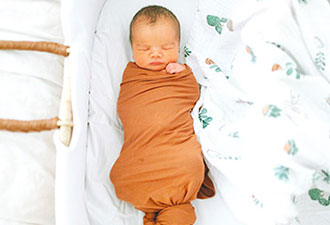
Many advocates of swaddling describe it as the secret to calming your infant and promoting better sleep. When you think that babies spend an average of 37 weeks feeling safe and secure in the womb, it’s no wonder that being in the outside world can be an overwhelming experience. That’s where swaddling can help to imitate the warmth of the womb as your little one adjusts to their new environment. Some of the benefits of swaddling include:

  • Babies up to three to six months have a strong startle reflex (Moro reflex). This causes them to flail their arms and legs, and the sudden movement can disturb their sleep. Swaddling helps to decrease the movement and stop this from happening.
  • It gives a baby the feeling of being held close.
  • Newborns often scratch their delicate skin easily and swaddling is a good way to keep their hands from touching their face.
  • The blanket keeps very young babies warm and cosy until they’re able to regulate their own temperature more effectively.

Swaddling safety

Blankets are generally not recommended for babies up to 12 months because of the risk of suffocation and Sudden Infant Death Syndrome (SIDs), leading some people to be concerned about swaddling. However, the American Academy of Pediatrics (AAP) recognises the benefits when the practice is done properly, following Safe Sleep Guidelines. The main thing is to make sure that the blanket isn’t too loose, allowing it to unwrap and cover the baby’s face. You also need to be cautious of securing the blanket too tightly around their hips, as this can cause problems with the hips and joints.

  • Always place the baby to sleep on their backs and tuck the bottom of the blanket underneath them.
  • Check that you can fit two to three fingers in between the blanket and your baby’s chest at the top. The bottom of the blanket should provide room for the baby’s legs to stay bent.
  • Avoid overheating by keeping the room at a comfortably cool temperature (around 20-24 degrees Celsius in Dubai) and don’t be tempted to dress your baby in multiple layers; a pair of pyjamas and the swaddle should be enough.
  • Let your baby sleep in their own crib rather than your bed.
  • Keep the environment smoke-free.
  • It’s recommended to stop swaddling once your baby is able to roll over onto their front.

Technique

Start by laying the blanket out flat, folding one of the top corners down. Place the baby on top of the blanket, face up with their head above the folded corner. Straighten their left arm and wrap the left corner of the blanket over their body, tucking it between their right arm and the right side of their body. Tuck the right arm down and fold the right corner over the body tucking it under the left side. Then, fold the bottom of the blanket up loosely and secure it underneath them.

Swaddling is just one of the many baby care topics we cover in our pre and postnatal sessions at Nightingale, contact us to find out more. Our newborn baby care nurses can help you with it.

Categories
Events Sleep training Training, Events and Workshops

Seminar on baby health @ Mediclinic Parkview

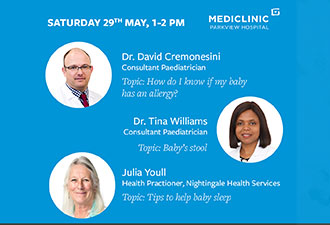
Attention new parents: A seminar is happening at Mediclinic Parkview Hospital on Saturday 29th May, 1-2PM.

Dr. David Cremonesini (Consultant Paediatrician) will talk about “How do I know if my baby has an allergy”,

Dr. Tina Williams (Consultant Paediatrician) about Baby’s stool,

And Julia Youll from Nightingale Health Services will give some tips to help your baby sleep!

seminar baby health
seminar baby health

Categories
Sleep training

Sleep positions – Find your perfect sleep posture

Following our earlier post about building good sleep habits for your baby, we’re turning our attention to the equally important topic of sleep positions for grown ups. Approximately 40% of our lives are spent asleep in bed, meaning the correct sleeping position is vital, especially if you suffer from neck, back, shoulder, or hip problems. Our Nightingale physios Roxanne and Mohammed share their inside tips on the best sleeping positions for a pain-free slumber.

Why does it matter how we sleep?

The most comfortable position, mattress, and pillow arrangement enables your body to remain in a neutral and compression-free, middle-range position for the joints. When your joints are held in an extreme position for a prolonged period it can cause pain and irritation, whereas the right posture can prevent problems from developing or reoccurring.  Although it’s normal to move around during the night, training your body to sleep in its optimal position can make a real difference.

Each position has its advantages and disadvantages, depending on any physical issues you may have.

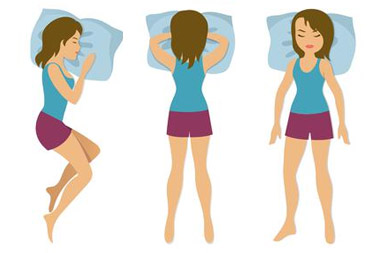
Lying on either side:

Side sleeping is recommended for most people, as it allows optimal alignment for the spine and joints, helping you maintain a neutral position and causing less pressure.

  • Tips: The knees and hips should be slightly bent up with a small pillow between the knees. The pillow reduces pressure and prevents the pelvis from tipping forwards, rotating the lumbar spine. Make sure that the pillow under your head fully supports the curve of your neck so that your head is in a neutral position. Your ears should be stacked one above the other, preventing your head from tilting down towards the bed (if the pillow is too low) or upwards (if the pillow is too high).

sleep position - side

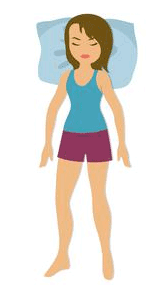
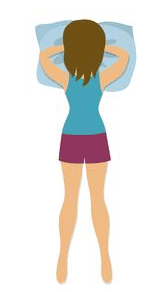
On your back:

The other widely recommended sleep position is lying on your back. This may be beneficial if you have shoulder or hip pain and find it uncomfortable to sleep on your side. However, lying on your back with your legs flat tends to create an arch in the spine, putting stress on the facet joints and shortening the lower back muscles.

  • Tips: Position one or two pillows under your knees to reduce the arch in the lower back. Also, ensure your pillow fills and supports the curve of your neck in a neutral position. If the pillow is too big, the back of your head will be tilted forwards; if it’s too low, your chin will point up.

Sleep position - Back

On your stomach:

Sorry if it’s your favourite, but this is the worst position for your body and spine! Your neck gets twisted in one direction, causing compression of the facet joints in the cervical vertebrae, as well as irritability in the arm and shoulder. It creates unbalanced tension in the neck muscles, leading to shortening and spasms, which can cause headaches and neck pain. There may also be an increased strain on the lumbar spine if your mattress is too soft, accentuating the arch and causing lower back pain.

  • Tips: If this is the only position you can fall asleep in, try placing a small pillow under your hips or stomach, then use a thin pillow under your head to minimise the twist in your neck. Avoid resting your head on your arms as it may contribute to shoulder pain and restriction.

Your pillow and mattress also affect whether or not you wake up with pain on a daily basis. A physiotherapist will be able to advise you on the correct sleeping posture, as well as what pillow or mattress is the most suitable for you. Contact us to find out more.

Sleep position - Stomach

Categories
Baby Care Child care Sleep training

Building Good Sleep Habits for Your Little One

As new parents, sleep is a rare and cherished commodity. It may seem like an uphill battle now, but it’s important to know there are things you can do to get more rest. And, what better time to try than World Sleep Day (Friday 19th March)?
Sleep is essential for improving health and well-being, and the theme of this year’s event – “regular sleep, healthy future”– will resonate with families, in particular.

The science of newborn sleep

Babies sleep in utero, but they’re not born with sleep association or any concept of day and night. They only start to produce the sleep hormone melatonin around 12 weeks of age, which explains why they wake up frequently for feeds before then. The circadian rhythm (the body’s natural internal sleep regulation) also takes a while to develop but once it does, infants sleep longer at night, meaning you can squeeze in a few more precious hours of rest.

Sleep disruption

Various stages in a baby’s development impact their sleep performance, so it’s important to remain flexible with a newly established routine. Common ages where we see sleep regression are 4 months and 8/9 months, when separation anxiety kicks in. Teething can also disrupt sleep because of the discomfort and distress it causes, making your little one more restless than normal. Toddlers, meanwhile, are learning lots of new things, which is exciting as well as overwhelming, so they may start to devise strategies to keep you in the room longer for comfort before they nod off.

Creating healthy sleep habits

Regardless of age, one of the most useful things we can do with a small child is to build healthy sleep patterns. There are many different approaches that depend on the baby, and your family’s circumstances. Some general recommendations include:

  • Be consistent – set a regular bedtime and wind-down routine, which is the same every night
  • Exposing your child to natural sunlight early in the day will help to set he circadian rhythm and regulate sleep patterns
  • Keep the bedroom dark and quiet at night with no blue light
  • Before settling them, check that baby isn’t too hot or too cold by feeling the nape of their neck or chest (rather than forehead)
  • Establish if they are thirsty, frightened, in pain, or if the nappy is wet
  • In the early days, many babies like the security of being swaddled but only use a light covering to avoid overheating
  • If possible, practice placing the baby in the cot drowsy but not fully asleep on occasion, so they can learn to settle themselves
  • Try soothing them by staying close and saying the same words, like a little mantra, on a nightly basis, lulling them into relaxed mode
  • Baby massage techniques are a great tool to learn and use at home before bedtime
  • If baby nods off in response to the breast or bottle, encouraging them to do it independently can be tricky. Ultimately, it is achievable if you use consistent methods that trigger the right brain chemistry and set their internal clock

Top tip: don’t overload yourself with guilt! When we’re tired and juggling many things, it’s easy to rely on short-term solutions to get you through. Establishing a long-term solution requires commitment, consistency and time, but it will pay off in the end.

When to get help

It’s difficult to define what’s normal or not and how long it will be before sleep issues constitute a problem. Generally speaking, if your baby is more than 6 months of age and you’re still chronically exhausted and experiencing poor sleep quality, it may be a good time to make arrangements with a professional sleep trainer.

– Written by Julia Youll, Public Health Practitioner at Nightingale
img